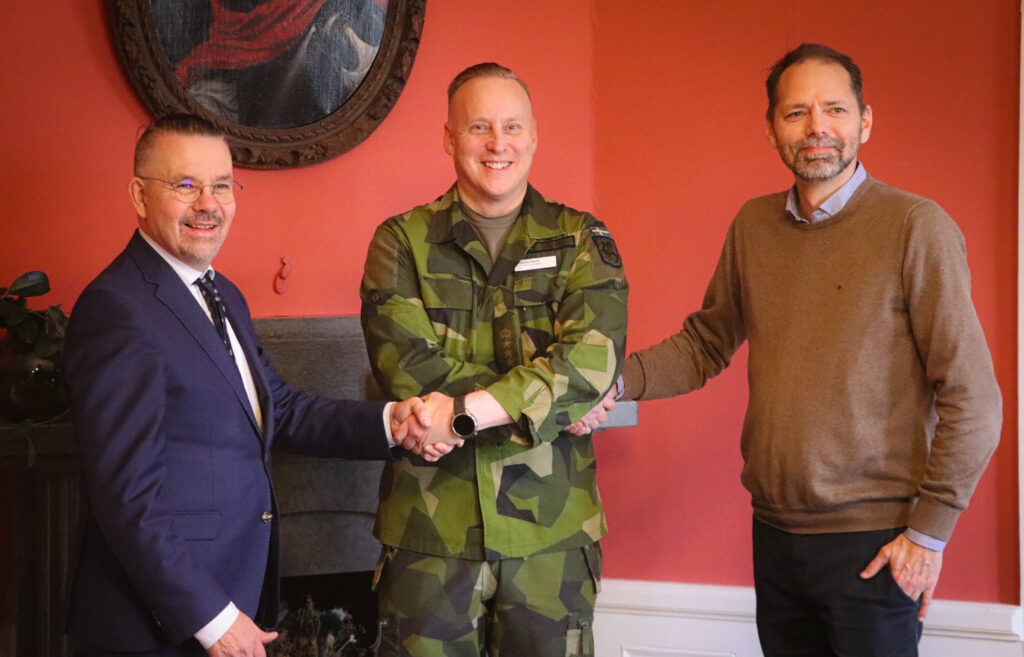
What founders should know about protecting software, using AI tools, and building an IP strategy that supports growth. This Thursday, our tech breakfast featured Christopher Hartland and Kristian Öwre, from HØIBERG, European Patent Attorneys located in Lund.
You have built a product that works, and you are preparing for a customer demo or an investment round, and someone asks: What stops another company from building the same thing?
“That question is a good place to start thinking about intellectual property (IP). The answer might be a patent. It might also be the know-how your team has built over years, the way you process data, or a combination of protections. What matters is understanding which parts of the business give you an advantage and how you can protect them”, says Kristian Öwre.
When can software or AI be patented?
“Start with the technical problem”, says Kristian.
Under European patent rules, software can qualify for patent protection when it produces a technical effect beyond the ordinary functioning of a computer.
“Software that improves how a computer allocates memory can meet that requirement. So can an AI system that helps a heart monitor detect irregular heartbeats. The invention still needs to meet the usual patent criteria, including novelty and inventive step.”
For an AI product, the technical contribution might lie in how the system collects sensor data, processes a signal or uses the result to control equipment. To find it, ask your team to explain what the system does differently and why that difference matters.
What technical problem have we solved, and how does our software solve it?
“Build an IP strategy around your next business decision”, Christoffer underlines.
Investors, customers and buyers ask different questions.
“A SaaS investor may spend most of the conversation on growth and retention. An investor backing a company built around a hard-to-replicate technical invention may want to know what a patent application covers and how that relates to the product. A pending application can inform that conversation early in a funding round, while its eventual scope is still uncertain.”
Customers may ask whether you have the rights to deliver and support the product. A grant funder may ask who will own the results of a collaboration. A potential buyer will want to know what can transfer in a deal and whether it supports their plans for the technology.
“Those questions help you choose where to spend your time and money. Copyright can protect your code. Trade secrets can protect internal know-how you can keep confidential. Trademarks can protect your brand. A patent may be worth pursuing when it can protect a technical advantage that matters to your business.”
If we protect this, what will it help us do?
Christoffer underlines: “Use AI to understand patent language. Keep invention details confidential. A convincing draft can still miss the invention.
AI can help summarize a published patent, explain unfamiliar terms or proofread text you’re cleared to share.
“A patent professional can do something different. We can ask what changed from earlier approaches, challenge your assumptions and help work out which details define the invention. Keep unpublished invention details out of public AI tools, please”, says Christoffer.
Before using any AI service with sensitive material, check who can access your inputs, how long they’re retained and whether they can be reused. If details of the invention become publicly available before you file, that disclosure can jeopardize its novelty under European patent rules.
Who is the inventor when AI helped?
Under the European Patent Convention, the named inventor must be a person.
“When AI is part of the development process, look at who contributed to the invention itself. Entering a prompt, on its own, doesn’t settle inventorship. Keeping a record of who proposed, tested, and refined the technical solution can help you reconstruct how it came about.”
Have the IP conversation before the demo
Before your next pitch, product launch, or partnership discussion, get your technical and commercial teams together and ask: What would be hardest for someone else to replicate, and what are we about to share?
“That conversation can help you decide what to keep confidential, what to discuss with a patent professional, and what you can confidently tell customers and investors about the advantage you’re building”, says Christoffer.