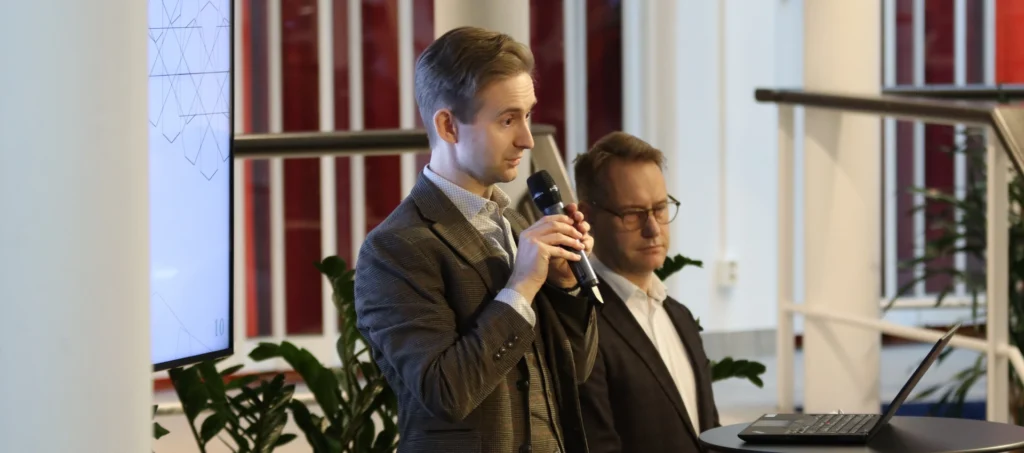
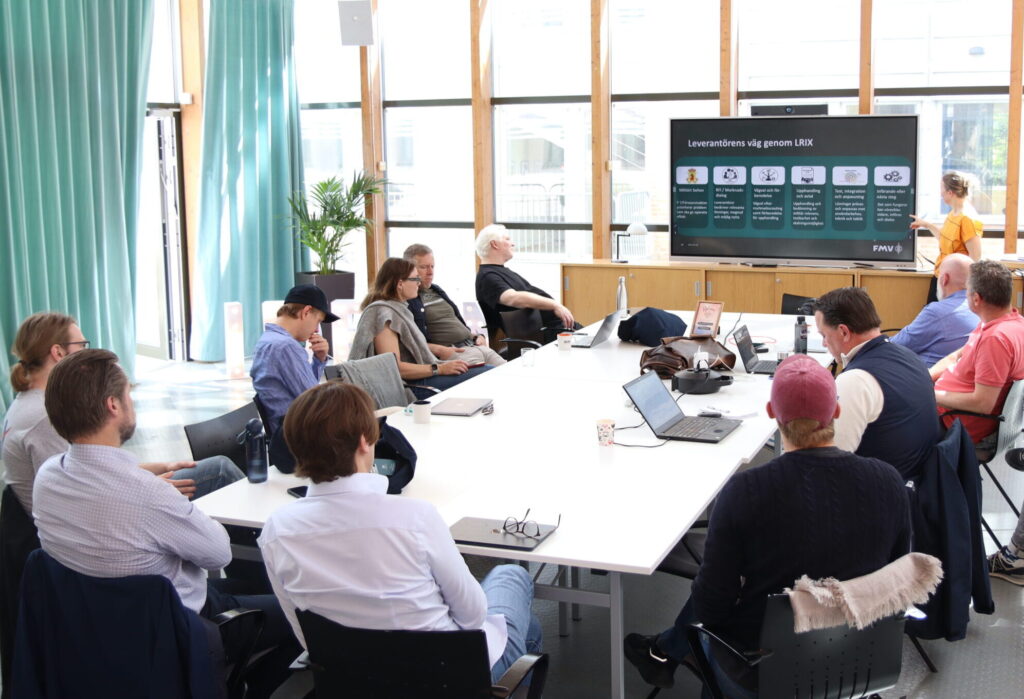
At Ideon Science Park’s Tech Breakfast, Aspia’s Milena Boyanova explained how Swedish companies can reduce the cost of research and development and make it easier to recruit specialists from abroad.
An engineer earning SEK 50,000 a month could cost their employer SEK 10,000 less in monthly employer contributions if their work qualifies for Sweden’s R&D deduction. That was one of the examples Boyanova, Head of R&D Advisory Services at Aspia, shared at the Tech Hub on 26 November. For a startup where people often work across research, product development and customer projects, the first question is which work actually qualifies.
What counts as R&D?
Under Sweden’s R&D deduction (FoU-avdrag), research aims to generate new knowledge. Development uses research findings to create a new or substantially improved product, service or production process. Boyanova illustrated the distinction with a simple example. Adding a red button might give you a new version of a product, but a change like that alone would generally fall short. Qualifying work must be systematic, carried out for a commercial purpose and involve employees working directly on the research or development. skatteverket.se
Under the current rules, an employee generally needs to spend at least half of their actual working time in a calendar month on qualifying R&D, with a minimum of 15 hours. For eligible pay subject to standard employer contributions, the deduction can bring the rate from 31.42% to 11.42%. skatteverket.se
Could you show who did what, and when?
Boyanova asked the audience to imagine that Skatteverket comes back three years from now and asks why a particular employee qualified in November 2026. Could you identify the project, explain what the employee did and show how much time they spent on it?
Many companies already have the pieces in their project plans, technical reports and timesheets. Boyanova’s advice was to connect those records while the work is fresh, so that each month’s claim can be traced to the project and the people who worked on it. Employers who missed a deduction can also revisit earlier payroll declarations. 2026 is the last year to correct declarations for 2020, and claims are assessed under the rules that applied at the time. skatteverket.se
Recruiting from abroad? Put the deadline in your calendar
Sweden’s expert tax relief (expertskatt) can exempt 25% of qualifying employment income from Swedish income tax for up to seven years. It can also reduce employer contributions when the employee is covered by Swedish social insurance. There are two routes to eligibility, one based on pay and the other on the person’s duties and expertise. That second route is worth knowing about for startups that recruit internationally and may find the salary threshold out of reach. forskarskattenämnden.se
Either the employer or the employee can apply. The application must reach the Taxation of Research Workers Board (Forskarskattenämnden) within three months of the employee starting work in Sweden. The board cannot extend that deadline. forskarskattenämnden.se
What could change in 2027?
Boyanova also walked through proposals to simplify the R&D deduction, raise the tax-free share under expert tax relief from 25% to 30%, and introduce an additional corporate income tax deduction equal to 200% of certain qualifying R&D wage costs. The proposed corporate tax deduction would be claimed through the annual tax return. All three measures were discussed as proposals at the breakfast. regeringen.se
For founders, there are two practical places to start. Pick one R&D project and see whether your records tell the story of the work, who did it and when. If you’re recruiting from abroad, check eligibility and assign someone to handle the application as part of onboarding.
Thank you to Milena Boyanova and the Aspia team for joining us at Tech Breakfast. The team also offered a complimentary introductory meeting for companies that want to discuss their circumstances.