Pre-Seeding and Seeding
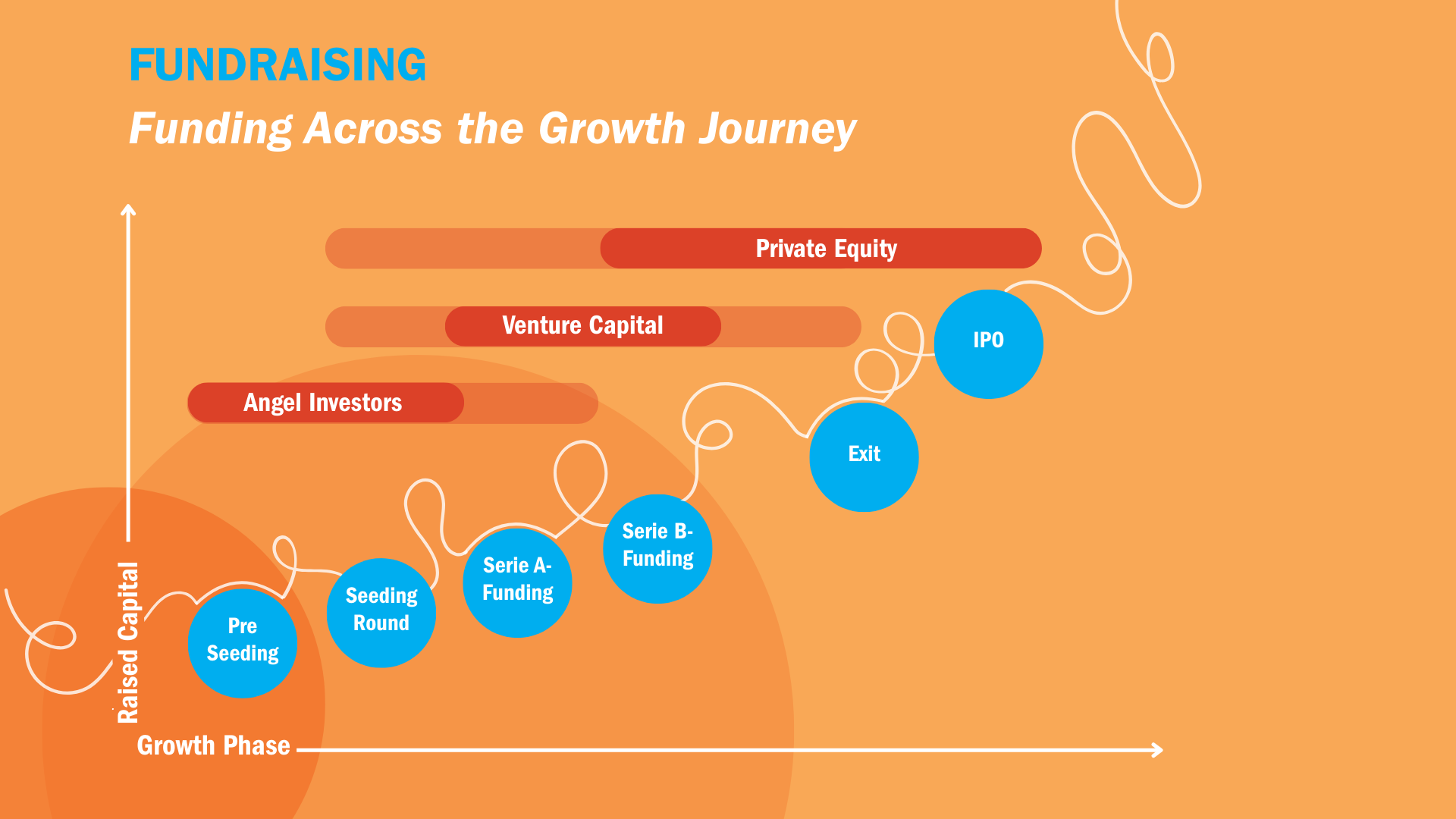
The first step of the fundraising journey includes the pre-seed and seed rounds. It focuses on securing capital to turn ideas into a viable business, validate the business model, and prepare for scale.
Pre-Seeding Round: Turning ideas into businesses
Pre-seeding is the very earliest form of fundraising for startup companies. At this stage, the goal is to secure capital to transform ideas into concrete business operations before they reach the market.
Pre-seeding capital often comes from personal networks, such as family and friends, or from angel investors.
The funds are typically used to build the foundation of the company, develop a prototype, and prepare for the next financing round (the so-called seed round).
For you as an entrepreneur, pre-seeding can be a decisive phase that provides the resources and support needed to begin the journey toward growth and profitability.
Business Angels – Pros and Cons
They contribute both capital and kompetentence
Angel investors are often private individuals who invest their own money in early-stage companies with growth potential.
In addition to capital, they frequently contribute valuable experience, guidance, and access to networks. For entrepreneurs, this means not only financial support but also access to expertise and connections that can accelerate the company’s success and growth.
High Expectations and Significant Influence
Regardless of the stage a company is in, raising capital always involves certain risks. Angel investors may require a substantial ownership stake and influence over key decisions as a condition for their investment, which can limit the founder’s control.
This early phase is also characterized by a high degree of risk, which often translates into strong expectations for rapid growth.
Because angel investors are usually private individuals, they may not always offer the same level of professionalism, structure, or operational support as more established investors.
Seeding Round: Time to Validate the Business Model
Seeding (seed funding) is still directed at early-stage companies, but for ones that are somewhat more mature, companies that have a concrete product or service and seek capital to validate their business model and scale it.
Investors at this stage may still include private individuals, but are more typically professional investors, such as venture capital firms.
“The choices you make today will affect your tax situation for many years to come. How you navigate the tax rules for owners of closely held companies — the 3:12 rules — can determine whether a future dividend or capital gain will be taxed at 20 percent, 25 percent, or nearly 55 percent.” (Swedish context) Joanna Bertlin, Authorized Tax Advisor, Grant Thornton Sweden
Funding Options During Step 1
1. Business Angels
2. Friends and Family
3. Crowdfunding
4. Venture Capital
5. Private Equity
Key Metrics You Will Want to Focus On
Product Development: Develop measurable data that demonstrates the feasibility of your product or service.
Market Validation: Gather customer feedback from users to verify the market need.
Cash Flow: Create a clear plan for moving from negative to positive cash flow.
Gross Profit Margin: Analyze the company’s margin after direct costs.
__________________________________________________
This content was developed by our partners Grant Thornton, that offers tailored guidance based on startups’ & scale ups’ unique journeys. Courtesy of Grant Thornton; Thank you for sharing your insights.